Category Archives: On the cover

On the cover

How socialism stole Venezuela’s oil and how to recover it

ARTICLE PUBLISHED BY TOMORROW’S AFFAIRS

Many commentators state that the United States’ intervention in Venezuela is all about oil. However, they seem to ignore the reality of what has happened in the country.
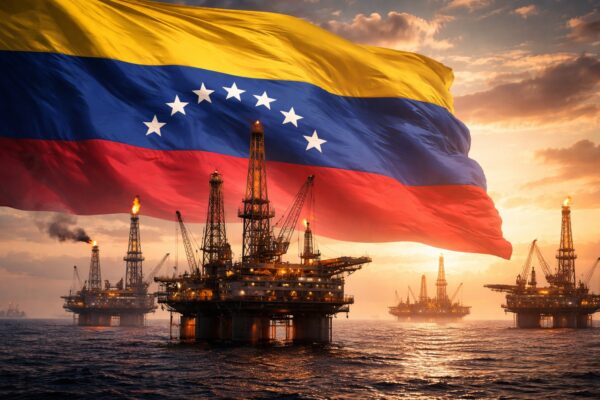
Venezuela sólo tiene dos opciones: o con EEUU o con una narcodictadura

The current system has been one of squandering and stealing oil for decades.

Venezuela’s oil sector, once the most efficient in the industry, has been systematically looted and weaponised by the socialist Chavez-Maduro regime and its political allies, turning the world’s largest proven reserves into a poverty machine instead of a development engine.

Any serious recovery will require dismantling this network of political exploitation, restoring the rule of law, recapitalising PDVSA, and orienting exports in transparent market conditions.

Continue reading How socialism stole Venezuela’s oil and how to recover it
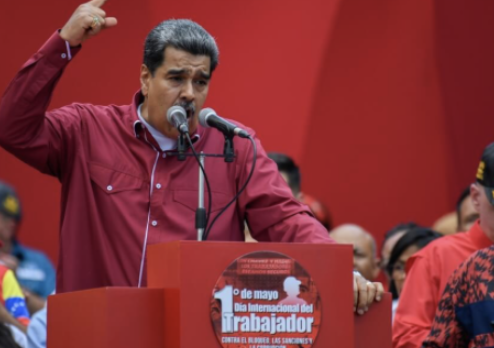

Socialism, not sanctions, is responsible for the destruction of Venezuela

Venezuela is not poor due to sanctions. It is poor because the Chavez-Maduro regime stole hundreds of billions of dollars and demolished the productive fabric of the economy.

Venezuela had 12,700 private companies when Chávez came to power, according to Conindustria. Only about 3,800 manufacturing industries are still operating, of which around 3,200 are privately owned and 600 are state‑owned.

Socialism, not sanctions, is responsible for the destruction of Venezuela

The assault on private property culminated with the expropriation of more than 690 companies in twelve years. Government-run businesses failed, and large state-owned companies in Venezuela are technically insolvent or heavily loss-making.

Socialism of the XXI century, they called it: government expropriations, price controls, capital controls, and complete absence of legal and investor security.

Continue reading Socialism, not sanctions, is responsible for the destruction of Venezuela

United States Elections: The Risk of Copying Europe

The United States election campaign is focused primarily on how much will the next president spend and the measures to combat coronavirus. Both issues should point to one conclusion: Unlike what candidate Biden wants to do, the next United States president should not copy the European Union.

United States Elections: The Risk of Copying Europe
Pete Linforth Pixabay

As we face a second wave of coronavirus outbreak in Europe, we know that the March measures and aggressive lockdowns were a grave mistake.

The European economy is on the verge of a double-dip recession, the unemployment rate is at 8.1% compared to 7.8% in the United States but the European Union still has around 10 million furloughed jobs. Real unemployment, if we use the same calculation as in the United States, is closer to 11%.

Continue reading United States Elections: The Risk of Copying Europe

Central Bank Digital Currency, A Growth Or Financial Repression Tool?

Central Bank Digital Currency, A Growth Or Financial Repression Tool?

The main central banks have been discussing the idea of implementing a digital currency. The rationale behind it escapes many citizens. Most transactions in the main global currencies are conducted digitally and one could say that the largest and most traded currencies, the US Dollar, Euro, Yen, British Pound, Swiss Franc, and the Yuan are already functioning as mostly digital money.

So, what are central banks saying when they talk about a new and different digital currency? It is basically another step in the effort to gradually get rid of physical currencies, with an idea of strengthening control of the payments and make it simpler to trace the use of a particular means of payment. It is also aimed at competing with global cryptocurrencies. Most will state that the reasons behind the idea of a central bank digital currency are efficiency and improving the transmission mechanism of monetary policy.

Continue reading Central Bank Digital Currency, A Growth Or Financial Repression Tool?