Why Solar Bankruptcies Soar Despite Growth and Subsidies

 SunEdison, Sungevity, Suniva, Beamreach, Verengo Solar … and now another giant, Solarworld.  Solar bankruptcies keep growing. The case of Suniva, for example, is amazing. It announced its bankruptcy just after receiving millions in subsidies.

Bankruptcies in the solar sector already surpass all those of inefficient coal and fracking companies combined. The interesting thing is that this domino of bankruptcies, which accumulates more than 120 corpses of large companies  around the world, is self-inflicted.

It is not due of lack of growth. Solar installations soared by 50% in 2016, with annual growth at 76 GW . Do you know the famous curse that says “if you run you hurt, if you walk, it hurts you more and if you stop, you die”? That, dear friends, is what happens to much of the solar sector.

It’s ironic: A sector that brags of how much it has lowered costs and how competitive it is, and at the same time blames its bankruptcy domino on low prices. A huge drop generated by excess capacity – over 40% despite exponential growth – and, with it, the need for operators to generate any cash and sell at lower and lower prices. The curse of the sector has been its own growth:

Death by working capital. Huge expansion plans and new capacity to meet a demand that has grown exponentially, but not enough to cover the pace of productive capacity growth. Cheap money and juicy subsidies justified a business model that was far from being an energy model, but closer to a builder-developer one: Over-indebted, dependent on subsidies and unable to absorb overcapacity and compete with its own price cuts.

With costs falling, many companies are economically unviable and if the price decline were reversed, they would be unviable as well. If the prices of the panels went up to stop bankruptcies, the mantra that solar is competitive with other energies would disappear in one minute. Any of the companies mentioned in the first paragraph of this article would have needed price increases in their products of more than 50% only to stop burning cash, let alone make money. Born from a bubble, dead by a bubble.

The reality is simple. If a technology is viable, it does not need subsidies. If it is unviable, no subsidy will change it.

The efficient companies will survive and absorb the weak, but let us not blame the collapse on a lack of environmental commitment or support, when it is an evident case of massive leverage and fraud, hiding debt off-balance-sheet and giving overly optimistic estimates to “inflate” share prices.

The problem is that an important part of the solar sector still thinks that the problem is that they are not “supported” enough or that governments have to subsidize more their business for a “greater good” at any cost to the consumer. A proof that it is not a problem of support or growth, is that the list of bankruptcies has risen after debt restructurings, capital increases, interest rate cuts, massive liquidity injections, and spectacular growth.

If a solar -or any- company goes bankrupt in an environment of huge subsidies, spectacular growth, low-interest rates and high liquidity, it is not a case of a mistake, it was a bomb about to explode.

That is why we may see more bankruptcies in the face of greater growth. Because the wrong model of overcapacity, high debt, dependence on subsidies and inefficiency is being perpetuated. And that is not attacking a technology. Do not mistake technology and environmental commitment with indebted and inefficient businesses.While the wind sector works with an industrial energy model, in the solar subsector the constructor-promoter model still exists, and this will not be solved by a climate summit or 50GW more in annual installations.

Some solar companies have learned to manage a realistic model, partly thanks to venture capital funds and outside companies who have bought what was left of the disaster created by engineers who ignored working capital and debt.

Finally, sanity is starting to prevail with real industrial energy models, less or no debt and managing inventories as entrepreneurs. But the problem is the same, if costs continue to fall due to competition, inefficient firms will continue to fall, and if costs rise, the technology will not be competitive. The devil’s curse.

Disruptive technologies cannot be based on inflationary models, because their own development attacks price inflation – in electricity prices, in asset valuations – and therefore companies cannot be leveraged as if they were regulated utilities.

A disruptive technology can only succeed if it understands its function, which is to reduce costs and energy intensity (in this case). If the solar sector is based on an over-indebted constructor-developer model, it loses its role of innovation and competitiveness to become rent-seekers, precisely what they criticize of the incumbents.

There is life in solar energy. If companies die, no one will be to blame but themselves.

Daniel Lacalle has a PhD in Economics and is author of “Escape from the Central Bank Trap”, “Life In The Financial Markets” and “The Energy World Is Flat” (Wiley)

@dlacalle_IA

Picture courtesy of Google

China’s New Silk Road Is Just Old White Elephants

This will not be the first or last time that we question the merits of enormous infrastructure plans. As we have shown on so many occasions, huge spending on white elephants is partially responsible for global stagnation and excessive debt. Huge pharaonic works that promise billions of dollars of growth and benefits that, subsequently, are not achieved, leaving a trail of debt and massive operating costs. But we have also analyzed those infrastructure plans that make sense.

Proponents of the mega stimulus plans ignore the importance of real profitability in favor of “sustaining GDP” in any possible way. A study by Deepak Lal , UCLA professor of international development, discusses the devastating impact on potential growth and debt of stimulus plans in China, and Edward Glaeser’s ” If You Build ” analysis destroys the myth repeated by many of the multiplier effects of public infrastructure. Advocates of infrastructure spending at any cost ignore the most basic cost-benefit analysis, underestimating the cost and magnifying the estimated benefit through science-fiction-multipliers.

Professors Ansar and Flyvbjerg have also devoted a great deal of effort to analyzing the negative effect of large “stimulus” plans from hydraulic megaprojects to the organization of the Olympic Games.

Deepak Lal’s study citing Professors Ansar and Flyvbjerg shows that the actual cost-benefit analysis compared to the “estimated returns” when projects are approved, proves to be disastrous. Fifty-five percent of the analyzed projects generated a profit-to-cost ratio of less than one, that is, they created real losses. But, of the rest, only six projects of those analyzed showed positive returns. The rest, nothing. The country does not grow more, it makes the economy weaker.

This week, China has hit the accelerator with its project of new routes connecting with the rest of the world called “new silk road”. The media has immediately praised the $124 billion additional funds to relaunch communications with the world. Direct freight trains to more than twenty European cities such as Madrid, London, Warsaw or Rotterdam, a pan-Asian rail network, railway connections between African cities where China has invested hundreds of billions in oil and mining projects, and ports in Pakistan and other countries .

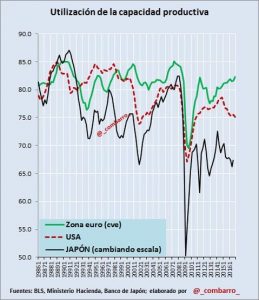
For China, it is an ambitious project that seeks three objectives: to redouble its bet, evacuating its enormous overcapacity, already close to 60%, to enhance collaboration with countries around the world so that they see China as an opportunity, not a risk, and finally, to reduce its huge indebtedness by encouraging growth.

The analysis looks positive, including savings in the sea routes, and the expected trade multiplier effect, but there are several elements of risk that we must not forget.

On the one hand, the estimated cost is simply too optimistic. The talk of huge projects ignores difficulties of all kinds, which, in some continents, includes military risks. It would not be difficult to see final figures that doubled those that are currently discussed.

On the other hand, China aims to place many more products in countries whose domestic demand is at least questionable and saturated, and ignores the risk that many countries will take the same measures that China implements, to “protect” their local industries.

Of course, the Chinese government presents itself to the world as the champion of globalization and a connection that benefits us all, but any dispassionate analysis shows that the new silk road is disproportionately more beneficial for China. Some think that China will adopt stricter rules of trade and working conditions. Given that the big beneficiaries of this mega-global-corridor are Chinese state-owned enterprises, many question that “change” in regulation.

Finally, these huge projects, with all their benefits, assume growth estimates that are, at the very least, optimistic, to cover the cost. What a good friend calls “the self-bail-out of Chinese overcapacity.” In this week’s presentations at the New Silk Road Forum, there were talks of multiplier effects for global economies that have neither occurred in the past nor can be considered realistic (including doubling estimated growth).

I fear the same old errors of optimism about growth and cost control that, as history shows, do not occur.

And no one has spoken of the deflationary effect . No one. While 27 central banks around the world and their governments are persistent in creating inflation by decree, does anyone think that huge access to cheap products from the Chinese giant will not create a greater risk of deflation? It’s amazing.

I’m not worried about that price-disinflation effect. It has positive consequences for consumers, but very negative consequences for the rent-seeking crony sectors that governments want to protect at all costs (China, too) because they are “strategic”. This new silk road is a time bomb for subsidized low productivity companies and for the inflationary aspirations of the indebted countries.

What about technology? These huge estimates of consumption and transportation of commodities used in the New Silk Road forum ignore the erosion of demand generated by efficiency and technology. In fact, the new silk road is a monument to the old economy, to inflate GDP via spending, and to transfer the surplus capacity of rent-seeking sectors from one country to another.

In 1992, only two G20 countries had China as one of their top five export destinations, now there are fifteen. However, in 1992 China had a productive capacity deficit, now it has 60% overcapacity, and – as it can not destroy that excess in a centralized planned economy – it intends to export it.

Let us take all that is good, but let us not doubt that there will be excesses. Let us not ignore that the new silk road is intended to alleviate Chinese overcapacity by evacuating it to other countries. It is not a project of globalization, but a bail-out of a Chinese model that starts to sink.

The risk that these megaprojects may become white elephants is not small.

Daniel Lacalle has a PhD in Economics and is author of “Escape from the Central Bank Trap”, “Life In The Financial Markets” and “The Energy World Is Flat” (Wiley)

@dlacalle_IA

Picture courtesy of Google, Bloomberg

The ECB Must Stop its QE Program Now. Here is Why.

This week the European Central Bank has announced that it will maintain its asset buyback program, despite the fact that the European Union is neither in crisis nor in a recessionary shock. This is the first time in history that major central banks are making repurchases in excess of $200 billion a month without being in a period of crisis.

The European Central Bank launched a fresh defense of its monetary policy, saying that low interest rates and monthly asset purchases of €60bn have helped to stimulate growth and jobs in the eurozone and prevented the bloc from sliding into deflation.

“Our monetary policy was successful. The question is: is it time to exit or time to think about exit or not? This time hasn’t come yet,” he said. I am afraid he is wrong, ignoring financial risk accumulation and perverse incentives in over-indebted governments.

The growth figures of the European economy are good, and manufacturing indices are expanding. But they were already in expansion before QE was launched. The European manufacturing PMI is at six-year highs, the expected growth for 2017 will be 1.7% and 1.8% for 2018, unemployment will fall to 9.4% and 8.9% in 2017 and 2018 respectively, and growth of investment and credit is close to 2.5%. However, inflation by decree has been a failure, rising in energy and food prices and poor in core underlying inflation, a consequence of accumulated overcapacity and poor productivity.

You could say that these good growth figures are because of the ECB policy, but Europe was already expanding and recovering before they bought a single bond. Europe has been improving for five years. But that is not the debate. Even if we assume, for a moment, that the ECB policy has “worked” -despite 1.2 trillion euro of excess liquidity and high-risk bonds at the lowest rates in thirty-five years- the ECB must stop the monetary laughing gas urgently, for several reasons:

It runs out of tools before a cycle change. With zero interest rates, buying in some issues up to 100% of bond issues’ supply, and with new debt financing governments’ current expenditure and low productivity investments, whenever the economic cycle changes – and it does -, the central bank will have run out of its only historical tools.

After 600 rate cuts and buying tens of billions of dollars per month, it would create a boomerang effect that would generate more stagnation, Japanese-style. Anyone who thinks that the central bank can put negative types and increase money supply further and change everything is dreaming. What has not worked from 5 to 0% will not work from 0 to -5%. Financial repression does not lead agents to take more risk and invest, but to be more prudent, to hoard on liquid and safe assets, because monetary policy encourages over-indebtedness and perpetuates imbalances.

The ECB has already gone beyond the Fed. The ECB’s balance sheet already exceeds 36% of the Eurozone’s GDP and controls 10% of corporate bonds, a “nationalization” of the corporate debt market of almost 1% per month. In the case of the US, the Fed is c10 points below. Only the Bank of Japan surpasses the ECB, and we already know the level of debt and stagnation that the country has. The risk of following the path of Japan is not small.

It does more harm to the financial sector than benefits to the real economy. The bankruptcy of the zero-interest-rate policy is unprecedented and jeopardizes the consolidation process. Non-performing loans remain above 900 billion euros, operating margins and solvency ratios have plummeted to the lowest levels in a decade, and since the program was launched, Europe has seen three banking shocks, in Portugal, Italy, and even Germany. The impact on the financial sector is not compensated by the alleged economic improvement (a loss of almost 90 basis points in margins versus a slight increase of 15 in financial sector results, according to Mediobanca).

It does not help SMEs or families. While the ability to repay debt has not improved and cash or credit ratios remain poor, zombification of the refinanced sectors is soaring. High-yield is at the lowest interest rate in at least thirty-five years. Governments have saved more than 1 trillion euros in interest on the debt, of course, but, to my surprise, they have spent it all, and the ability of most European Union governments to adapt to an increase of only one 1% in the cost of debt is extremely low.

This leads to a rising tax burden despite the massive transfer of wealth from savers to governments, and – with it – it is extremely complex for SMEs and families to receive the slightest benefit of this extreme liquidity. Only 1% of SMEs have sought new credit, because their costs, excluding labor, have grown almost ten points more than their revenues, and of the meager 29% who requested a loan, only 69% received the required amount, according to the ECB. Despite extreme liquidity and low rates, demand for solvent credit remains very poor.

The huge risk of a bubble in bonds and financial assets is not offset by the supposed benefits of keeping the quantitative easing program. If we do not understand that accumulated risk is the root of the next crisis, we will repeat the mistakes of 2007.

Ignoring the risks that monetary policy generates in financial markets is very typical of central banks. It is thought that they can be mitigated, that they are acceptable and that they are not dangerous. And they are. They will be. Getting used to abnormally low rates and excessive liquidity to perpetuate imbalances is a huge risk. Not preparing for winter is suicidal.

Daniel Lacalle has a PhD in Economics and is author of “Escape from the Central Bank Trap”, “Life In The Financial Markets” and “The Energy World Is Flat” (Wiley)

@dlacalle_IA

Picture courtesy of Google