Category Archives: Sin categoría

The Revolution of Shale Gas

As I expected in my predictions for 2010, the process of mergers and acquisitions in the energy sector is not waiting. Total surprised us last week following on the footsteps of Exxon and embarking on the adventure of shale gas, through a joint venture with Chesapeake. The benefits of shale gas for oil companies are many and varied. Let me try to explain the environment as concisely as possible.

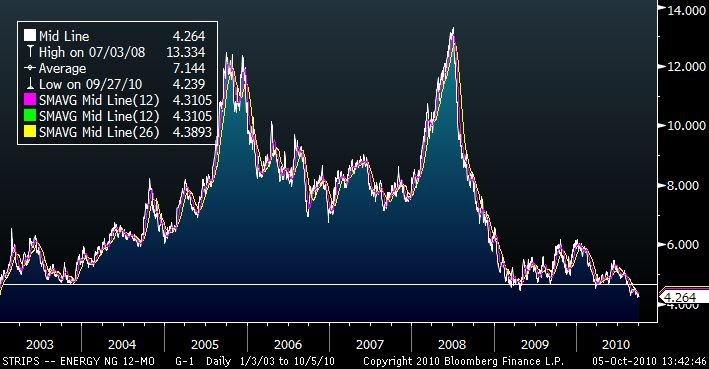
The technologies that allow the extraction of gas have proven to be much more competitive than it was initially estimated. We will not expand in technical terms, but basically through a process of fracturing the rock with water injection or horizontal extraction companies can stimulate the production of a gas that otherwise would not be economically produced. In fact, large companies are extracting gas at costs of $1.8 to $3/MMBTU compared with previous estimates of $ 5.5-$ 7. This cost levels allow very attractive returns, over 30% ROCE, even at current gas prices in the U.S., despite how much these have fallen from levels near $12 to $6/MMBTU today.

Moreover, the geological differences between areas of the United States that have shale gas (Haynesville, Marcellus, Barnett, and others) have proved to be lower than estimated, which allows a more comfortable environment for investment, as the potential economies of scale are very important. This is why the companies are buying large areas of land, as the shale gas production grows very fast but declines quickly once reached plateu. After this abrupt decline, production can be sustained for a long time at economical levels.

Furthermore, for companies like BP, Exxon, or Total it is an excellent opportunity to access abundant reserves of gas in a country with almost no risk (United States). Not to mention that it is a platform to learn and explore opportunities in shale gas in Europe, mainly in the North Sea and some Eastern European countries.

Matt Simmons and his team expect that by mid 2020 half of the US gas production will comes from U.S. shale gas, and the estimated reserves of unconventional gas in the most conservative scenario would cover 65 years of production, c1.35 billion cubic feet.

Total has paid the equivalent of $30,000 per acre of land in its joint venture with Chesapeake in Haynesville. In 2008, BP paid an average of $19,400 in Woodford. 2007 saw how Shell paid for Duvernay $13,100 per acre. Meanwhile, Statoil paid for their participation in the Marcellus area c$7,000 per acre. The price has jumped fourfold in just over two years. Not surprisingly, therefore, that US independent exploration and production stocks with shale gas exposure have soared, even though gas prices continue to be low.

Interestingly, amid all this, the financial market assumes that the oil majors are kind of large NGOs, which will exploit the reserves purchased in an indiscriminate manner, flooding the market and accepting gas prices well below the current ones. I can not believe that companies which operate under a strict target of return on capital employed will accumulate reserves to lose money monetizing the production at suboptimal prices. Meanwhile, the six big oil companies control more than 25% of the reserves of U.S. shale gas. What do you think are going to do? The consolidation process will continue and we will see that the profits will be very substantial in the medium term.

Energy Predictions for 2010

(Published in Cotizalia on Dec 24 2009)

First, I do not agree at all with those who see the dollar appreciated in 2010. We are living in the greatest appropriation of wealth in recent history, and if the dollar has fallen so much so far, wait to see the effect of the 1.3 trillion dollars that the U.S. has to refinance and the $700 billion in pending stimulus plans. The weak dollar is part of the reason why I am more positive than other investors in oil and gas prices.

Second, everyone expects interest rate hikes. I do not think so. With the UK and US together needing to refinance $2 trillion, debt to GDP of 300% and 10% unemployment, interest rate hikes are more a dream than a reality.

In the world of oil, we face a year of anemic demand and abundant supply. The supply problems and decline rates that are so appealing for the market are not an issue for 2010. Demand is likely to be above 85.4 million barrels a day, but this means that we will have a capacity surplus of around 4 million barrels a day. Therefore, the production cuts from OPEC and its adherence to the quotas in place (at very low levels today, 58%) will be decisive.

But what we are likely to see are aggressive moves in Asian demand due to lower nuclear production and the already mentioned infrastructure projects. Thus, it is not surprising that we might see a period of high volatility. Certainly in 2010 oil will likely continue to be a hedge against the dollar. I also expect demand from emerging countries to grow by around 6%, so it would be reasonable to see oil reach $85/barrel as inventories are reduced to normal levels, which I do not expect to happen until 2011.

On the supply side, with a 5-6% decline from existing fields, non-OPEC production is likely to fall to around 50.8 mbpd instead of the estimated 51.3. And forget refining. With nearly 7 mbpd of excess capacity and anemic demand, refining margins will not be a riot.

The gas market in 2010 will likely see a drastic drop before the recovery, which will be even more drastic. Demand continues to be the problem because it depends on electricity consumption and we will see coal to gas switches, but no real demand increases in a year in which producers will increase LNG supply capacity by 10%.

But beware, because the market is exaggerating the gas overcapacity in at least 20BCM. I am convinced that we will see lower exports to Russia (145BCM instead of 162 expected), Norway and Qatar reducing exports, leaving the market “only” with 10BCM of overcapacity, more than enough to justify spot price of $ 5.5 -6/MMBTU and 35p per therm … but before the recovery we will see gas prices to record lows, until the recovery in demand in winter.

The electricity market in Europe will probably live a delayed pickup in demand, where we still need an industrial demand still heavily damaged by the crisis. A drop in electricity demand of 0.5% in Europe could be feasible. Reserve margins (excess capacity) in Europe are at levels of 25% considering the additional 15GW of wind capacity, and we probably will not see an environment of demand-supply balance until 2012. In such an environment is difficult to see higher electricity prices. And in oil, gas and electricity, high volatility leads to reductions in investment, which explains in part my positive view of future prices.

2010 will, in my opinion, be a year of divestments and capital increases, and energy companies can take advantage of the market opening to preserve the strength of their balance sheets in the bottom of the cycle. I estimate around $35 billion in the oil and electricity sectors. Pay attention to balance sheets, it seems that everyone has forgotten debt in 2009. It will also be an exercise in which well-capitalized companies will continue to aggressively buy assets, particularly in exploration and production and “shale gas. The war for natural resources is not going to stop, and I reckon a figure of about $30 billion in mergers and acquisitions.

I believe that 2010 will not be a bad year for investments by taking advantage of occasional corrections. Everyone is negative or cautious, money remains cheap, the cost of capital of companies continues to fall, bonds are overpriced … This generates expansion of multiples even with stagnant profits. Remember Buffett, the market is never wrong. Use it as a tool, not as a guide.

Observations on the arrival of the electric car

(Article published in Spanish in Cotizalia on Deecember 17th 2009)

Everyone talks about the electric car in Copenhagen, even when there are only five cars representing the sector at the summit. However, recently we have seen reports from the current U.S. government, which is not suspected of being paid by the oil industry, which show that the electric car can be a huge cost, and in the most optimistic forecasts, it will be an anecdote in the worldwide fleet of vehicles.According to a study commissioned by the U.S. Department of Energy, the electric car will cost $ 18,000 more than traditional cars because of the price of the batteries. Moreover, according to the study, funded by the U.S. administration, it is more than likely that the batteries to move these vehicles, lithium ion, will not be cheap enough to stimulate a shift by consumers, at least until 2030.

According to independent analysis, the cost of lithium-ion batteries may fall from the current $ 600-800/kwh to $ 300-500/kwh. An electric car needs a minimum of 20kwh of capacity and a hybrid requires at least 10kwh. I can not foresee a radical change in the global fleet switching to a car whose battery will cost over $6000. Funnily, there is a publicly traded company whose stock market valuation is equivalent to $40 million for electric car produced. But from a more optimistic perspective, the process is not going to eradicate traditional vehicles, but make available to the public an alternative that in the long term is acceptable.

The above study states that the electric car will require “subsidies of hundreds of billions of dollars” over the coming decades to reach a level of market penetration in vehicles with 20-60 kilometres of autonomy. The aim is to build some 40 million electric cars globally (a 15-17% penetration) in 2030. In light of this, listening to Copenhagen delegates predict the end of oil consumption is highly amusing.

The U.S. president, Barack Obama, wants to have one million electric cars on American highways in 2015. In Spain we want to have a million, as many as throughout the whole U.S., but in 2014. It seems very ambitious. And considering that in the U.S. they have already spent 11 billion dollars in subsidies to the project, even more difficult.

It is worth mentioning where the market is positioning itself to meet the demand that the electric car might generate. Besides building the necessary networks and generate electricity with nuclear energy, wind and coal, the challenge will be to control natural gas reserves sufficient to ensure supply of gas to CCGTs, essential to provide flexibility to the system in periodic increases of consumption. Because the gas supply overcapacity which we live today will not last much beyond 2014-2015, as we discussed a few weeks ago, moving from 30BCM per annum to 5BCM spare capacity, according to my estimates, once new LNG projects are completed. Also worth exploring is the possibility that the “shale gas” provides, a type of unconventional natural gas extracted from low-porosity rock, and we’ll talk soon about it.

And in times of overcapacity is when the bargains appear … Between 2008 and 2009 we have seen the big utilities invest more than $12 billion in gas reserves or gas producing companies. It’s obviously a long term bet. It is also Investor T. Boone Pickens,’ bet for example. And I think that is what Exxon sees, buying XTO for $31billion on Monday, some 7,500 million barrels of oil equivalent in gas reserves taking advantage of low prices. Exxon is always looking forward. We must listen.

Copenhagen and the aim to create the biggest bubble in energy

(This article was published in Cotizalia on December 10th)

We are reading many headlines these days about the Copenhagen summit and the commitments that are expected to come out of it. I will not discuss the scientific findings that lead to this group of nations to meet, but would warn about the plan to create the biggest energy and financial bubble in history: a huge fund to drive CO2 through the roof.

In this summit governments will take the first global decision since the industrial revolution that is not based on an improvement in economic efficiency. It is about intervention on a global scale to promote industrial processes which are more expensive and inefficient than current technologies, and managing the global energy policy from the UN, not from markets and sovereign governments.

The interventionist governments have already created a commodity, CO2, and assigned a fabricated supply and imposed demand. This artificial commodity was allowed to trade on the markets with the goal of encouraging speculation, the same speculation that is demonized when it comes to gold or oil.

But the problem is that the prices that they had expected, €40-50/ton CO2 did not materialize; given that when markets are allowed to work they fastidiously often reflect the true dynamics of supply and demand, and prices sometimes fall. Now the CO2 (December 2010 contract) is trading around € 15/T. And the plan does not accept price falls, as they need to generate price inflation to justify the transition to expensive alternative technologies. Thus, the world’s governments are meeting this week to create a huge fund, estimated at more than 300 billion dollars, financed with our taxes, to revive the bubble, where the laws of efficiency, supply and demand are abolished in favour of a supposed climate benefits in 2050. A bargain.

The expected agreements could be summarized in three parts. First, developed countries would commit to reduce their emissions to a specified amount.

Second, developing countries would commit to reduce the “growth in emission intensity.” As the reader may have guessed, the sum of the two will not reduce emissions, but increase it. Why? Is there no commitment to save the Earth? No, because the objective is not to save anything except the mega-bubble by creating more emissions than required so countries will buy more expensive CO2.

Come to the third: They want to create the previously mentioned $300 billion fund dedicated to the transfer and technological adaptation.

Let me translate: Dear friends of developing countries… please forget about using your natural resources to grow at $ 40/bbl as we will force you to use foreign technology and increase your energy bill to $ 110/bbl or more.

In short, a fund controlled by politicians from the UN, with such a great track record as managers, that decides and orders on global industrial development with an objective that is unquantifiable in any economic or efficiency term. The UN will impose foreign and expensive technologies on developing countries at a reasonable price or free to begin with, but a very high cost subsequently, in order to increase their dependence. This is a fund that will be created through higher taxes, increasing the bill for the CO2 bubble. And the bill to purchase CO2 credits will cost Spain, for example, 3 billion Euros between 2008 and 2012, and the UK will pay around 5 billion in the same period.

I agree that CO2 emissions are a problem to solve. I am convinced that many renewable technologies will be competitive without subsidies in the short term, and I firmly believe in companies that innovate and lead the change process. But this change can not be managed by supranational agencies with no positive track record. The law of supply and demand, as well as innovative and efficient technologies should be the axis of a profitable and efficient change, but not imposed.