Mexico… Another Tequila crisis on the way?


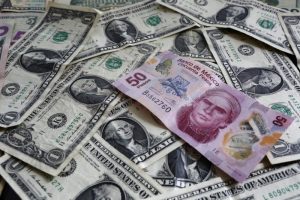
Last week, the Central Bank of Mexico intervened twice attempting to defend its currency  with more than disappointing results. The Mexican peso has suffered one of the largest devaluations of any currency in the past twelve months, only comparable to that of the Turkish Lira, and weakened again shortly after the interventions.

Despite these measures, the local currency continues to be under pressure and the cause is mainly the United States rate hike.

On the one hand, Mexico suffers, along with the rest of emerging markets, from capital outflows due to the rise in interest rates in the US.

As US ten year bond yield rises, emerging market debt loses its appeal, especially at current levels. These countries had seen a record inflow of capital over the past eight years thanks to excess liquidity and lower rates in the US, and issuances yield fell to a 30-year low. Today, even at 7.6% these rates are less attractive compared to a US 10-year bond, close to 2.4%.

That is the main reason, not Donald Trump’s tweets, but of course the president-elect’s messages regarding NAFTA and his criticisms of automobile companies do not help.

Many analysts compare the current risk to that of 1994, shortly before the so-called “Tequila crisis,” which triggered a Mexican stock market crash and a domino effect on other emerging markets.

Why? The combination of capital outflows and rising current account deficit, which could lead to a huge liquidity crisis.

But, nevertheless, there are very important mitigating factors.

Although the outflow of capital is true, it is not at worrying levels. In addition, in 2016, Mexico was the third largest recipient of net capital , despite low oil prices and risks in emerging economies in an environment of low global growth and weaker international trade.

In addition, although foreign exchange reserves have declined since 2014, they remain at record highs and more than seven times above 1994 levels.

One of the distinguishing characteristics of this crisis compared to 1991 or 1994 is precisely that central banks of emerging economies have carried out a correct policy of preserving foreign currency reserves at the highest possible level, thus avoiding a liquidity crisis. Exactly the opposite of what these countires did in the 90s crises, where reserves were almost depleted trying to “defend” the currency.

In fact, the action of the central bank of Mexico in these days can be called more “technical” than the desperate ones of that time.

Another, and very important factor, is the exposure to leverage in the stock markets. Before the Tequila crisis, citizens and entities borrowed massively to buy a seemingly unstoppable bull stock market. The level of leverage in the stock market was such that there was a period when “margin debt” in terms of market size was higher than that of the US stock market in 2007.

If we analyze the perfect storm that happened in 2013-2015 in emerging countries, a dramatic crisis has been avoided despite the abrupt fall in commodities, net capital outflows and the global slowdown in trade (the “sudden stop” effect that we mentioned in 2013 here).

In this period, Mexico’s foreign currency revenue has been reduced by a third from the highs, and the fact that massive recession and crisis has been avoided proves that many things are very different today in Mexico.

These important differences must be taken into account when we read some alarmist messages, but we must also be cautious because the situation for emerging markets remains complex given the “hoover” effect of the US rate hike. A strong dollar, rising rates and inflation provoke a dollar-sucking effect out of riskier markets and back into the US domestic market. Especially after almost a decade of extraordinary capital flows into emerging markets.

Let us not forget the risks, the macroeconomic, political and monetary threats. The end of excess liquidity and cheap money is here and countries like Mexico will have to adapt to a level of investment and capital flows that will likely be much lower than those of the last eight years.

Mexico will have to take advantage of a year in which oil prices have stabilized to match its investments to a new reality, closer to that of 2000-2006 than the three US monetary stimulus programs. But if we have to look at risks, we also have to look at opportunities, because Mexico has always been a better option compared to other countries with greater risk.


Daniel Lacalle is PhD in Economics and author of “Life In The Financial Markets” and “The Energy World Is Flat” (Wiley)

@dlacalle_IA

Article published in elespanol.com in Spanish

Picture courtesy of Google Images

“Even Keynes was in favour of cutting corporate tax” By Álvaro Martín (CdV)

By the title you might think that my article might be centered in Keynes’ economic policy ideals towards taxes, but no… I know and I’m conscious that that would be a really interesting debate, and that many of you will enjoy reading it, and sooner or later we’ll have time to talk about that, but today I want to write about a more actual theme that doesn’t come from 70 years ago, and that nowadays is essential in all the economy’s minister desks, I hope you know what I’m talking about.

Lately this last two months, in the news or even in the day to day and into economic conversations, nobody stopped talking about corporate tax or even its effects and causes in the economy, but why? It seems like economists are really excited about it, and have reasons for it.

Recently, the Hungarian Prime Minister; Viktor Orban has displayed his intentions on decreasing the corporate tax rate to 9.5%, having the lowest one in the EU, followed by Ireland, which actually maintains its rate in 12.5%.

Let me tell you that Spain is not an example to follow in this case, and that today talking about it might be really boring, I like action, and action is that the USA will provide to the labor market with Trump’s intentions of decreasing brutally the corporate tax rate by more than 20 percental points in just one year… from its actual 35% to nearly 15% over the companies’ income.

The American Dream

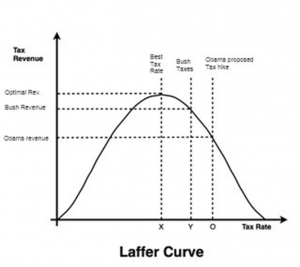
Let me say that by reducing the global tax rate on income and in contrast to what many people think, this would help to improve the American tax system and rise the revenues of itself.

We shouldn’t be negative when we are told by the new director of the FED, that the highest corporate tax of the major powers of the world (USA’s 35%) will be lowered down to the OECD average 25%, or even to its Canadian partner rate- which is 15%, leading to greater innovation in all the sectors of the economy and will help to shift profits generally upwards.

Should be kept in our minds, that by cutting corporate taxes, the USA will be much more competitive within international markets, generating higher aggregate demand and benefiting the larger part of Americans and their wages.

Internally, into the country, the new lower rates will reduce the costs of production capital in many firms, mainly manufacturers, which will rise the investment levels into that particular market, at the same time it will contract market share from economies as the Chinese.

With higher money being in circulation in the USA, productivity will increase due to more incentive for labor and higher salaries for the jobs in the secondary and tertiary sectors, producing consequently much better standards of living in the mean term.

Labour, wages, consumers & living standards … everytihng’s related

Secondly, we have seen able to see through experience how a lower tax rate on corporations will reduce prices of natural goods and materials, reducing business costs and freeing companies from their production expenses, allowing to increase supply in the market, as in the EU, where stock rates have risen by 6.5% over the last decade.

As we have previously mentioned, by lowering tax rates, investment and economic growth will be lifted in the economy, which will give place to greater wages for the human capital and improved working conditions for many, as we have observed that in the vast majority of developed countries, productivity is highly related to the final wages received by workers, and larger incentives lead to higher productivity of lab.

In case of decreasing the US corporate tax down from 35% to the 20% settled in the UK will rise over time full time employment by 2.8% in the mean term, generating 600,000 new jobs just in the first year, according to a study from the TAG.

But lowering corporate tax won’t be only beneficial for entrepreneurs and international investors, as it will also have many positive effects for the local population and low skilled workers.

Having a higher economic growth and an increased tax income will allow the government to descend tax rates also on income tax, which will provide workers with much more disposable income and purchasing capacity, rising living standards.


In conclusion, by reducing the tax rate to 15%-20% will make the economic growth of the USA to be boosted to a 3.3% extra added to the current growth rate over the next five years.

Workers will be one of the most benefited groups for this decrease in tax rates, and mainly in corporate, which will delegate on an increment in employment with 600,000 jobs being created just in the first and a half year of mandate, and wages of previously stablished employment will rise by 3.6% over two-three years.


Álvaro Martín is an international economy student. You can read his articles in Club de los Viernes´s website.

The End Of Currency Wars?


“From its creation in 1913, the most important Fed mandate has been to maintain the purchasing power of the dollar; however, since 1913 the dollar has lost over 95 percent of its value” James Rickards

One of the least talked about proposals of the future Trump administration is the one that aims to penalize with economic sanctions those countries that manipulate their currency … even the US.

The proposal is not entirely new, and has been defended by Republicans since 2014, but the novelty is to penalize monetary manipulation.

On the one hand, Republicans have two proposals, one in the House of Representatives Financial Services Committee -of 2014- and another, of 2015, in the Senate Banking Committee by which the Federal Reserve would be prevented from making decisions on interest rates and balance sheet expansion if they deviate by more than two percentage points from a predetermined Taylor Rule. Let’s explain.

If the Federal Reserve targets a level of inflation and employment for a level of rates and monetary policies, it would have to explain to Congress or the Senate why it changes or deflects the normalization when these targets are met.

Why? Very few representatives of the Republican party deny that the dramatic cut in interest rates led to a huge bubble that generated the 2008 crisis, and that prolonging the so-called expansive policies in recent years has generated another bubble in bonds and an excess of euphoria in financial assets with no discernible impact on the real economy ( read the results here )

The indiscriminate creation of money not supported by savings is always behind the greatest crises, and there is always someone willing to justify it as both a problem and its solution.

Add to this that the economists of the Federal Reserve and its chairpersons were all unable to alert or even recognize the risk of such bubbles (from Greenspan to Bernanke or Yellen) and you will understand why there is a growing body of politicians concerned about monetary policies that are always launched as if they had no risk and then justified with the lame argument of “it would have been worse.”

Of course, the Federal Reserve rejects such limitations. When the central bank becomes the largest hedge fund in the world under the premise that there is “no inflation” despite a massive bubble in financial assets, it is difficult to change the methodology of the entity. But after consistently erring on estimates, impact and consequences, it is normal that the Republican Party and many Democrats put the mandate of the central bank in question .

Carl Icahn, one of the world’s top investors and Trump’s newly appointed regulation adviser, still holds the napkin where he took note of the Federal Reserve chairman’s response to his question on whether they had gauged the negative consequences of the Fed´s monetary policy. ” We don’t know “, was the answer.

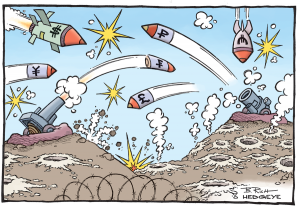
But I am especially interested in the idea of penalizing countries that implement devaluation policies of ” beggar thy neighbor ” after the currency war seen in recent years. Read here.

Several years ago, in 2009, I had the opportunity to chat at a meeting with the incoming US Secretary of State, Rex Tillerson, and he was already saying that the greatest threat to the world was the spread of currency wars.

Now, only a few days away from getting a clear picture of the entire US government team and advisors, Rex Tillerson, Mick Mulvaney and Carl Icahn are clearly against the policies of financial repression. Even Steve Mnuchin himself has often commented on the risk of inflationary policies.

But the US cannot prevent central banks from other countries from continuing to impoverish their citizens through devaluations and brutal increases in money supply … Unless they are fined for doing so. And that penalty can have dissuasive effects and, in addition, prevent the generation of larger bubbles that lead us to another financial crisis. It is no coincidence that Mick Mulvaney applauds initiatives like Bitcoin  and the depoliticization of currencies.

It is not about returning to the gold standard or anything like that. In fact, what this group of representatives of the Republican party demands – and in that they are absolutely right – is the end of uncontrolled monetary excess without any responsibility on its consequences. Rejecting a system that encourages bubbles and over-indebtedness under the excuse that “it could be worse.”

We do not know if these measures will be implemented, but I think it is important and healthy that the debate over the excesses of central banks is raised at government level in the world’s leading economy. Trump himself, who once said that “America can print all the money it needs,” has abandoned that ridiculous comment.

In any case, just as the crisis of 2008 ended the open bar excesses of some financial operators, it is time to alert that central banks´balance sheet cannot be used indiscriminately as if they were high risk funds to perpetuate the bubble , when the result has been more than disappointing. Recovering a little sanity, even modestly, will not hurt anyone. We shall see.


Daniel Lacalle is PhD in Economics and author of “Life In The Financial Markets” and “The Energy World Is Flat” (Wiley)

@dlacalle_IA

Article published in elespanol.com in Spanish

Cartoon courtesy of @Hedgeye

Bitcoin: 2016 Winner Of The Ongoing Battle Against Financial Repression

Much has been said these days about 2016 for stock markets, financial assets, winners and losers in a certainly complicated year.

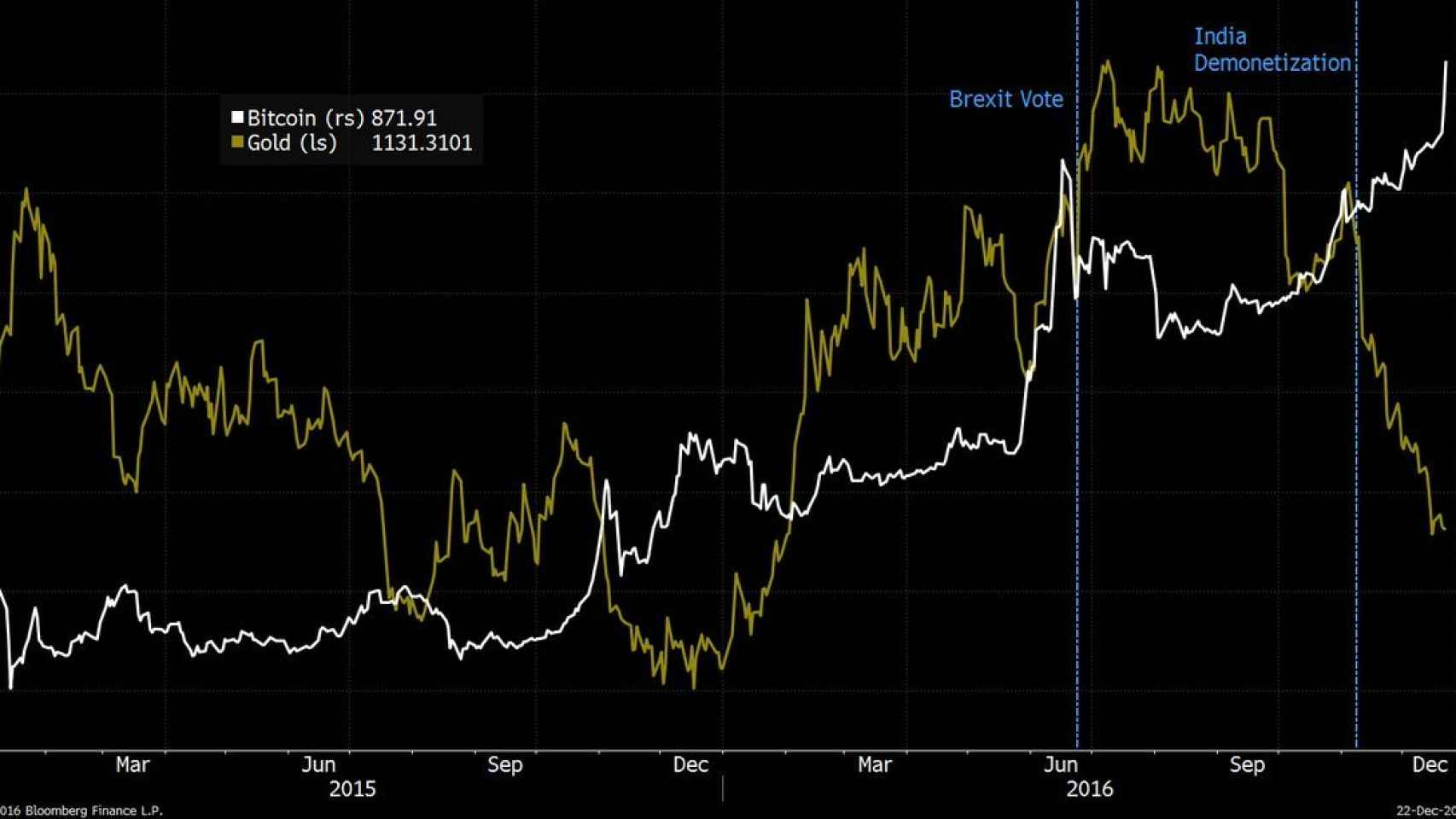
But if there should be an honourable mention, that should go to Bitcoin, the virtual currency that has surpassed all expectations of revaluation and reached $1000 on January 1st. Up more than 87% in 2016  supported by strong buying from Chinese and Indian citizens on expectations of huge devaluations of their local currencies.

The resurgence of the shelters against the destruction of currencies by governments is not a novelty of 2016, but was accelerated with the generalisation of financial repression policies -devalue and cut rates- that more than 25 central banks carried out since 2008.

The assault on the saver has been incessant with the disastrous monetary policy that seeks to extract from citizens their savings to maintain unsustainable government and debt imbalances.

The search for ways to preserve wealth in a society which owns most of it in deposits, makes citizens seek any way to avoid the assault on their savings from the massive printing of money through increase of money supply.

This monetary assault is the most antisocial policy that exists, it destroys the middle class and savers, and is justified by economists with completely fallacious, almost religious arguments, fake expectations of growth and science fiction improvement of the economy that are never achieve and then excused with the infamous “it would have been worse,” “it was not enough “and” we must repeat “.

For this reason, the search for a currency whose control is not in the hands of States has been a constant in preserving capital since Nero came up with the “brilliant” idea of ​​creating money “for the people” by putting other metals in silver coins or the times of the terrifying Assignats in France… The race against the assault on the wealth of citizens by inflationists has always existed.

Whenever government’s imbalances soar, the “solution” almost inevitably comes from “dissolving” the wealth of citizens and appropriate it via inflation – the tax of the poor – and devaluation.

We have a surprising paradigm. And why not gold? Well, gold has appreciated 8.5% in 2016 as well. In history, it has almost always served as a means of payment in any country and transaction.

The difference between Bitcoin and gold in recent years is basically that, while one has been rising fast as a possible currency and as a store of value as doubts dissipated ( read “Bitcoin , free currency, bubbler or Ponzi scheme?” ) on the other hand, gold was not as strong because the monstrous monetary policy implemented worldwide generated disinflation due to the collapse of the velocity of money and perpetuation of overcapacity. In fact, gold lost part of its attractiveness as a reserve of value as hyperinflation risks were limited. This excess of inflation occurred aggressively in financial assets – bonds in particular – and Bitcoin replaced part of that value reserve.

Bitcoin is not yet a reality as a free currency for global use, its evolution depends on being able to implement it globally and clarify doubts about its value as a refuge.

Bitcoin is a currency startup. A means of payment where states cannot interfere in the amount and cost of money available, where it is not possible to create fake money not backed by savings, and where one can ‘escape’ and take refuge from the assault to the saver which is the growing financial repression imposed by governments and central banks. Doubts come because the ‘shelter’ is virtual, and therefore always subject to computer attacks. In addition, history makes me fear the confiscatory reaction of States when it reaches – if it does – a “dangerously high” level of implementation. Remember Roosevelt when he decided to confiscate the gold of his citizens in 1933. “For their own sake,” of course.

Bitcoin is proving to be a powerful exchange network and its revaluation shows that those who trust in that network maintain their positions in the medium term. As the increase in supply is limited, it is revalued in the face of increased demand. A financial asset where its scarcity, future demand and its quality are valued against the possibility of exchanging it for other currencies, goods or services in the future. The fact that you can liquidate that asset and pay debts and taxes with the profits generated is positive. But it is not a currency until it can be used as a generally accepted means of payment for goods, services, taxes and debts.

What Bitcoin and the revaluation of the gold in 2016 sow us is that a growing part of the population continues to look for ways to shelter their savings against the assault of a monetary policy that aims to use the deposits of the savers to pay the debts of the inefficient. We shall see.

The new administration of the United States is starting to openly speak of penalties to countries who manipulate currencies even its own Federal Reserve. If the US ends this monetary madness, we may see a drop in interest in independent currencies or reserves of value, that is why we said here that the dollar may be the new gold. But citizens will continue to seek alternatives to defend themselves from the temptation of some States to appropriate the wealth of the savers to cover the excesses of the wasteful.


Daniel Lacalle is PhD in Economics and author of “Life In The Financial Markets” and “The Energy World Is Flat” (Wiley)

@dlacalle_IA

Article published in elespanol.com in Spanish

Graph courtesy Bloomberg