Anti-nuclear State of Fear. Japan and the impact of the tsunami

(This article was published in Cotizalia on 19/3/2011)

Let me begin this article by sending a heartfelt remembrance to the great country of Japan, and to all those affected by the disaster and their families. We don’t forget them.

But my job is to talk about energy and the disaster has a huge importance for the market of oil, gas, nuclear energy and CO2.

The perceived risk of nuclear energy has soared , even leading to Angela Merkel to take the populist measure of ordering to stop the seven nuclear plants built before 1980 for a period of at least a month. This implies a loss of about 7.1 giga watts of electricity generation in a country that has not seen a nuclear accident of any relevance in many decades.

What has been achieved with this measure has been to make the country poorer as energy prices soared, but also impacting the EU, as wholesale electricity prices in UK, France and other countries, which remained depressed for months, are up 11%, coal is up 14%, gas (NBP) is up 12% and CO2 prices, which had not moved for nearly eighteen months, have risen 10%, above the expected increase in thermal generation, thus slashing any remote possibility of meeting the Kyoto targets, in addition to giving a blow to competitiveness. The price of uranium plummeted 19% to $ 54/lb on the risk of loss of at least 7% of annual demand. All for the perception of political risk, ie that the European Union will take action against nuclear energy.

The Fukushima Daiichi’s accident is very important. But it is an exception. And if there is proof of the security and reliability of nuclear power, it is shown by the fact that out of the 11 reactors affected by the earthquake, only two have suffered an accident. And this exception originated in the midst of a natural disaster which unfortunately coincided other unusual circumstances, such as the blackout of eight hours. To make wild and hasty conclusions about the rest of nuclear power stations, particularly in a country, Germany, where there is no seismic risk, is incredible. That does not mean that we should not review and improve all security systems. But … stop 30% of nuclear power stations in Germany due to an accident in Japan?.

The loss of the capacity of 11 nuclear plants in Japan has an immediate effect of increasing demand for liquefied natural gas (LNG) by substitution effect. In 2007, when Japan closed the Kashiwazaki-Kariwa nuclear plant, 40% of the lost capacity was immediately replaced by gas.

The impact on the demand for LNG (liquefied natural gas) caused by the loss of nuclear plants mentioned can be up to 0.7 BCF/ day, ie, absorbing 50% of the current excess capacity of the gas system. This would send to Japan from 5 to 6 additional LNG tankers per month . At the time of writing this article, the price of liquefied natural gas contracts for new ships had soared, from $ 9/MMBTU a month ago to nearly $14/MMBTU. Still at prices well below those of 2006, making the LNG the cheapest alternative back-up energy source today.

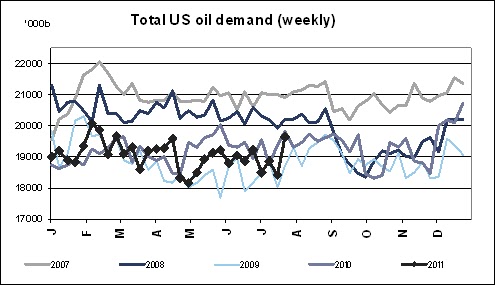
For the oil market, the Japanese tsunami is, to give you an idea, similar in volume to the impact of Libya for the supply side, but of opposite sign. That is, Japan means a possible loss of demand of about 1.3 million barrels per day. Assuming only the impact of Japan, which is about 4% of global refining capacity, and no contagion effect on the economies of the West, there could be a further impact on oil demand.

And all this leads to renewables. Interestingly, the initial effect has been an avalanche of buyers into solar stocks . But in a sector with structural overcapacity, the loss of demand in Japan, which is about 7-8% of global demand for solar panels, will be a real problem that will not be easily offset despite the dreams of launching more aggressive environmental policies.

The view that solar will suddenly grow exponentially is questionable particularly when U.S. and European gas is still much cheaper than solar energy (photovoltaic) despite the cuts in the premiums seen in Germany, Spain and other countries . And coal is also much cheaper and reliable. Even if CO2 prices soar to €23/tm (it’s at €17.5/mt right now), coal generation runs at a fraction of the cost of solar photovoltaic. To give you an idea, in Germany, the same government that takes action against nuclear plants has seen the brutal effect of solar energy on prices. Germany has accumulated 40% of global solar installations over the past two years and has seen the cost of subsidies reach to more than €56/MWh, 56% of the retail price for the consumer.

Alternative energies are valid but can not replace nuclear power and, as any alternative, should prove to be cheaper than the incumbents. Because if not, the anti-nuclear rhetoric, anti-oil, anti-everything that is going on is going to prove to be anti-competitive and anti-growth. And forget about reaching Kyoto targets if Germany dismantles the nuclear park.

Nuclear energy accounts for 14% of the electricity generated in the world at a cost of about €33/MWh if we assume all costs, including closing and cleaning. Solar energy is less than 0.08% at an average cost of €410/MWh, twelve times more expensive. Solar energy today costs about $700 per barrel of oil equivalent, and therefore more than 25 times the average price for liquefied natural gas. This without mentioning the necessary investments in transmission networks, estimated at one trillion US dollars in Europe alone.

Solar energy, by definition is intermittent, ie, its plants operate at less than 10% utilization, as opposed to nuclear or hydro, operating with load factors of 70-80%. Wind energy has a much lower cost, an average of € 78/MWh, although still higher than gas, coal, nuclear and hydro, but also has the disadvantage of a low and unpredictable utilization factor (23-24 %). Additionally, it requires huge investments in networks. Therefore, an aggressive energy policy change based on an accident in a distant country seriously affects the competitiveness of countries and, after a decade of clean energy implementation, no significant net job creation or reduction in the cost of energy. It is clear that the costs exceed the alleged benefits. And studies made in Spain and the US show that for every green job created, two are lost from lost competitiveness, as industries’ costs soar. First Solar’s CEO says that solar energy will be competitive within ten years. They said the same thing years ago, referring to 2010. They have to prove it.

If we multiply by ten the OECD investments in prevention and safety of the nuclear power plants currently in operation, this would not pose anywhere near the same cost that would be needed to replace 10% of nuclear power by solar energy. And the latter would still have to compete with other sources of energy that are more abundant, cheaper and flexible.

It is worth continuing to invest in security, investigate further about economically viable and safe energy, but the greatest risk we face now is to take populist measures that sink competitiveness, curtail security of supply and make the system more expensive.

In energy, substitution can only come from competition. Either you compete or you disappear. Crude oil beat whale oil on price 120 years ago. The same happened with gas and coal. Anything else is dreaming.

Brent-WTI Spread…. More Fundamental than Market Perceives

brent wti
(This article was published in Cotizalia on Feb 17th 2011)

I write to you this week from Oman. Impressive country, producing 900 thousand barrels of oil a day, and 9% of GDP from oil revenues, which finances amazing investments in infrastructure and civil works from Musqat to Salalah and other cities that are downright impressive.

As a country, it’s an example of how different the countries of the area are, despite the Western media efforts to put them all in the same basket of so-called risk of Egyptian contagion.

Another week and now that the Egyptian crisis has been solved, the market continues to focus on that country and the risk involved in the Suez Canal for crude supplies. And there is no real risk. The importance of the Suez Canal for the transportation of crude oil has fallen sharply in recent decades. During the 60s and 70s, almost 10% of global oil traffic passed through the canal. Today, it’s less than 1%. Moreover, as the three largest companies working in the channel say, the traffic is roughly balanced, with 55% of oil on ships heading north (992 thousand barrels/day) and 45% (about 850 thousand barrels/day) due south. Any problem in the Canal is, first, negligible for the transit of oil and, second, very easy to re-route around the Horn of Africa, an increase of transit time of less than 15 days.

For those who care about Egypt and the Sumed pipeline, just remind them that it only moves 1.1 million barrels per day despite having a capacity of 2.4 million barrels per day. And as a good friend of EGPC told me, there are few safer places than this pipeline, where the army has more troops than any city in the country except Cairo.

And in this environment we find the Brent and WTI spread at historical highs. Two clear effects: first the inflationary impact on Brent added to the deflationary impact on WTI to create the largest differential between the two ever seen: $14.5/bbl. Also very wide differential relative to other crude, Bonny Light (Nigeria), in particular, and Asian Tapis.

Let’s start by explaining what justifies the weakness of WTI:

Inventories at Cushing (at Oklahoma) are at historically high levels. 50% higher than the average for the past five years (25022). The problem is that the WTI weakness shows the growing isolation of the North American market and infrastructure problems to evacuate excess oil.

WTI crude trades on the basis of inventories at Cushing, in the middle of the American continent, and it is hard to move oil out of the area (called PAD II) or the large refineries on the Gulf.

1) There is enough transport capacity to carry crude from the Gulf to the center of the continent, but not vice versa. The fact that the Enbridge pipeline has had problems has increased the glut of crude in Cushing.

2) There has been an increase in exports of crude oil (oil sands) from Canada to the U.S., which increases the overcapacity in Cushing. Transcanada launched the second phase of its Keystone pipeline, which attracts even more crude to Cushing bottleneck.

3) The increase in U.S. domestic production, including Bakken, is also filling the stores in Cushing. The over-production in the U.S. is partly because the gas companies take advantage of high oil prices to produce more natural gas liquids, whose price is close to oil, in order to fund production of natural gas which today at $4/mmbtu, is not giving the best economics, actually very poor returns. Therefore they compensate for the low profitability of the gas with the price of associated liquids.

Add the fact that three refineries have been closed for maintenance, and we have the perfect storm. Excess production of high oil prices, withdrawal of the American system because of lack of infrastructure, and reduced refinery demand .

Meanwhile, Brent is affected some powerful inflationary forces:

1) The decline of production from Norway and North Sea, that previously functioned as a cushion against price increases, and does not produce that effect anymore.

2) The increase in OPEC oil transit to Asia, and rising domestic demand in exporting countries have reduced the oil for export. Saudi Arabia expects to increase its exports by 1 million barrels per day, but, for now, demand does not justify it.

3) The perception of geopolitical risk and the effect that we mentioned of transport cost increase. The market assumes that the cost of transport must rise. We are already seeing freight day rates recover, particularly in the VLCC segment, as I commented with Oman Oil. Having seen the Baltic Dry Index tumble to record lows due to excess spare capacity of ships, we could start to envision a horizon of recovery. Very gradual, and certainly not to be bullish, because overcapacity still exists (especially in the Capesize and Panamax segments.) And if freight costs rise, the chance to evacuate American crude to Europe is reduced.

As I mentioned two years ago on the differential between gas (Henry Hub) and oil, it is very dangerous to play against a very clear structural effect of isolation of a market, the American, in which the administration has no intention of promoting improvements in the system, and as a result, crude oil and domestic gas (WTI and Henry Hub) at lows is a clear boost from the country’s competitiveness.

Further read:

http://energyandmoney.blogspot.com/2010/01/revolution-of-shale-gas.html

http://energyandmoney.blogspot.com/2011/06/iea-releasing-strategic-reserves.html

Lybia In Flames And The Clash of Civilizations

How naive we were. We thought that the riots in Egypt were going to wake up a sort of semi-hippy dream of peaceful transition to an oasis of Western-style liberal democracy.The Western world is increasingly lost, and we believe our own illusions. And the illusion is over.

On Tuesday, Colonel Gaddafi slashed all expectations and brought us back to reality . From the balcony of one of his homes, speaking to a virtual audience as the camera focused a huge golden statue of a fist crushing a military aircraft, he reminded us that the delusions of peace and democracy were just that, delusions. The picture was worth a thousand words. The Colonel is not resigned to be another Mubarak .

Until last week, the risk to the energy market appeared to be limited because the process in Egypt and Tunisia was contained with no impact on the supply of oil and gas. Tunisia and Egypt were not high-risk countries. The protests were relatively peaceful. They had weak governments. The army was close to the people. None of the two countries owes large sums to Western banks and governments, and none was a significant net exporter of oil (both net importers of 25 thousand barrels per day in 2010 due to growing demand).

Libya is different . Because Libya is a large net exporter and the real army “is” Gaddafi’s 120 thousand soldier. Because Gaddafi arrived in 1969 when he was 27 years old in a coup that many thought would fail, and has shaped the country to his image and personality, with a mixture of Islam, iron hand, socialism, capitalism and good old totalitarianism … and there he has remained, longer than any of the international leaders, rivals or friends.

Now anarchy is about to explode along the risk of breaking up the country in tribal areas. And if that happens, billions of western investments into the country will be wiped out.

The Western press shows a country seemingly unanimous in their demands and objectives. Nothing is further from the truth. The Libyan population is extremely diverse, proud and a machine of military prowess. Both Italy and the late Ottoman Empire are aware of the risk of facing the Libyan tribes. Of the 140 tribes in the country, thirty are considered highly relevant as agglutinating powers, of which four have real influence in the circles of power. The tribe Misurata is one of them, particularly strong in two cities, Benghazi and Darneh. The tribes Beni Hilal Beni Salim have goals and interests that are perceived to be opposed to Colonel Gaddafi, but another, the Magariha tribe, is considered very close to the leader, although some observers believe it may be precisely this one which could instigate a coup. The risk of civil war and dismemberment of the state is far from negligible. And democracy or Alliance of Civilizations? No way.

Do not forget that Colonel Gaddafi has been a unique dictator, only comparable to Saddam Hussein in his mix of charisma, influence and iron fist control of a highly complex ethnic puzzle. Rumors that Gaddafi has a personal army of 120k mercenaries (compared to 50k of the official army), willing to blast wells and refineries and defend his position, make Libya a dangerous powder keg and the similarities with the Iraq of Saddam Hussein in 1991 are quite significant.

Also, do not forget that the Libyan leader has gone from being public enemy number one in the seventies and eighties to one of the most defended by politicians of all colors. While he was self-proclaimed defender of Palestine, the “anti-imperialism” of Cuba and of Islam, he also became a major trading partners for Italy, the US and UK, laying down his weapons of mass destruction in 2003 and collaborating with the West in the war on terror.

This led to a huge flow of Western investment between 2001 and 2010, particularly Italian. And Libyan oil concessions are some of the most attractive margins and returns for firms in the country. Lybia has also been one of the largest investors in Italy, with c€50bn in investments including Fiat,Unicredit and ENI.

Colonel Gaddafi from this balcony reminds us that we have much to lose. And that the examples of Egypt and Tunisia are nothing more than that, examples. That MENA (Middle East and North Africa) is not the EU. Each country is a world of ethnic, tribal, religious and military power. And the risk of further deterioration and lengthening of the crisis is not small, bringing to mind the memory of Saddam Hussein in 1991, whom also seemed trapped after the massacres of Kurds and Shiites and still remained 12 more years in power. And the information I receive from the Middle East reminds me that Bahrain, Syria and Jordan will not be comparable to Egypt and Tunisia.

Saudi Arabia, Oman, Kuwait and UAE still remain in relative calm. They should stay that way. Saudi Arabia has announced measures to increase social security protection, subsidies for housing and job creation as well as increasing the budget for charity and reduction of citizens’ bank debt. From our European paternalism we may criticize what we want, but do not forget the importance of balance in geopolitics. I recommend “The Lesser Evil” by Michael Ignatieff. Because things can get much nastier.

Libya produces 1,661,000 barrels per day of crude, 80% of them for export, and 16BCM of natural gas. It has about 44 billion barrels of oil reserves and 54 trillion cubic feet of natural gas reserves . And unlike in Egypt, supply shortages are a reality.

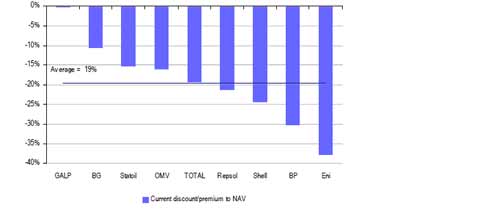
ENI, OMV, and Repsol, have the highest Lybian exposure, with 20%, 24% and 7% respectively of its net asset value in the country. They all announced on Tuesday the evacuation of nearly all staff in the country.

Supplies of gas to Italy through the Greenstream pipeline have been suspended. This means 8BCM of gas and nearly 80% of supplies from Libya to Italy, which accounts for 10% of the total supply of gas to the country.

The reason why the commodities market has reacted more strongly to Libya than the Egyptian crisis lies not only in the aggressiveness and forcefulness of the government’s response to the demonstrations, but the fact that the majority of Libya’s production is exported. If we consider that there is a risk of cuts in oil production because of the crisis in the MENA region, the net exported barrels (total production minus domestic demand) of Libya, Yemen and Bahrain account for 1.7 million barrels a day, almost 1.8% global production.

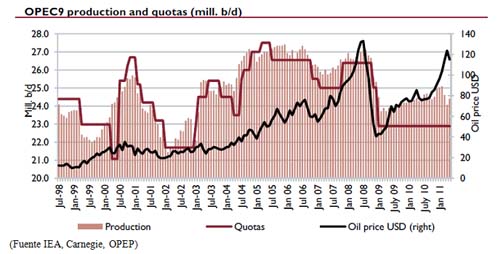
Today those possible “lost” barrels can easily be replaced immediately by barrels of spare capacity from Saudi Arabia (4 million barrels a day). But the contagion risk, and inaction of the West are starting to shift the market’s mind to the possibility that the spare capacity of OPEC as a whole, 5.5 million barrels a day can evaporate rapidly, and then find ourselves in a really problematic environment.

But the danger is complacency and to think that this ends here, and stay looking and waiting. Italy at least has a chance to mitigate the Libyan risk due to its access to Russian gas from Gazprom. But for Spain, although Libya is irrelevant within the total supply, the real risk lies in Algeria, followed by Qatar and Egypt. Algeria was no less than 30% of gas supplies to Spain in 2010, Qatar and Egypt 15% 8%. And Algeria, in terms of geopolitical risk, comes after Libya . Do not forget that in Algeria there were intense protests in January, but also years ago, long before the crisis erupted in Tunisia and Egypt.

Those who mention nationalization risks should not forget that that process already occurred. The vast majority of producing countries nationalized all their reserves between 1951 and 1980. But, as mentioned here two weeks ago, oil companies are going to be, as they have been for decades, the ones paying in this situation. All those investors who have been driven to buy shares of large integrated oil stocks in a Bear Market forget that they are mere concessionaires and that the PSC (Production Sharing Contracts) are at risk of further cuts, at best, or fall into the limbo of a long and tedious administrative chaos. And it should be noted that the Libyan PSCs are some of the most attractive.

In the end, Samuel Huntington was quite right in his indispensable book, “The Clash of Civilizations.” Most of the instigators of the riots don’t seek Western democracy. They seek regime change and conquest. Huntington did not predict that the detonating force would be the implosion of some Middle Eastern countries First, implosion, in which the Internet has played an undeniable detonator effect, and after explosion. And the shock wave could be coming towards the European Union.

Egypt: A brief guide to the energy implications of the unrest

Egypt: A brief guide to the energy implications of the unrest

Egypt: A brief guide to the energy implications of the unrestHere is a summary of my views on the Egypt crisis, stocks involved and how to play it.In terms of oil, none of the countries presently affected is a major producer in a global context of oil (1.1mb/d). Yemen and Egypt are important for gas markets as significant producers of LNG for international supply (20mtpa/ 8% global capacity). However, they are very important for low cost deliveries to Europe and for South Europe refiners (Repsol gets part of its crude for Cartagena and ENI for Toscana from Egypt).

The threat of contagion within the MENA region (Algeria, Bahrain, Djibouti, Egypt, Iran, Iraq, Jordan, Kuwait, Lebanon, Libya, Morocco, Oman, Palestinian territories, Qatar, Saudi Arabia, Ethiopia, Sudan, Syria, Tunisia, United Arab Emirates and Yemen) is what most analysts see as most worrying. I would categorize the risk as low in the pure arab states (Saudi-EUA-Kuwait and Iran) and higher in Algeria, Jordan and Syria, where civil unrest has been highest (food prices up 59% in Jordan and Syria while unemployment soared). Out of these, only Algeria is a serious threat to global supply of gas.

Algeria has 159 trillion cubic feet (Tcf) of proven natural gas reserves – the tenth-largest natural gas reserves in the world, and the second largest in Africa. Algeria produced 3.08 Tcf of dry natural gas in 2010, and consumed 1 Tcf of dry natural gas domestically.

Egypt consumed more than it produced for the first time in 40 years in 2010.

Egypt’s EGPC is a strange animal as it does not operate any of the licenses in the country, but foresees the developments and takes the money. Most of the production is offshore or in the Western desert and has not been affected by the riots. As an example, in the past 20 years of presence of Apache in the country there has never been a change of license or nationalization. Egypt also has a very advantageous (for the country) taxation system, local content employment requirements and now that is a net importer, needs more from IOCs than ever.

The final risk is the possibility of disruption to the smooth passing of ships through the Suez Canal. So far this has been denied as a threat.

Companies exposed to Egypt and Algeria.

If we establish the low(er) risk of disruptions in Saudi, Iran, Iraq, etc… The key companies exposed to the Egypt problems are:

OMV, REPSOL & ENI have the largest exposure with c.20% of their commercial reserves in the region.

ENI’s Egyptian exposure is 14% of group production and 7% of upstream value. However, ENI is the most exposed to North Africa and the MENA with additional risk to supplies to Italy from Egypt and Algeria. Eni has a limited exposure to Egypt but 36% to the region (including Libya and Algeria).

OMV has a 20% exposure to the region (mainly Lybia) and recently added exposure to Tunisia through an acquisition. OMV, Total and BP each gets 3-4% of their total production from Tunisia, Egypt and the Yemen in aggregate. However, Egypt, Tunisia and Yemen account for quite more than that in their growth strategy and give them the highest ROCE. Exxon also drills offshore Egypt but the exposure is negligible. Chevron and Conoco also only marginally present. Of the rest, exposure is also quite small, including Statoil with less than 10% upstream value exposure (mainly Algeria).

BG. Egypt and to a lesser extent Tunisia are relevant production centres with around 30% or 220kboe/d of its 2009 production. Worth noting it is mostly offshore, with a large presence of local workforce and that there has been no disruption to activities.

GDF-Suez, Shell. Jointly operate the Alam El Shawish concession in the western desert area of Egypt. In Egypt, GDF Suez holds stakes in two other offshore licenses: it operates and owns 50% in West El Burullus area (together with Dana Petroleum, bought by KNOC), where an initial discovery was announced in 2008 and has 10% in the North West Damietta licence operated by Shell (61%). In liquefaction gas, GDF owns 5% in the first LNG train from the Idku plant that delivers 4.8 bcm of natural gas annually and buys its total production. GDF SUEZ loads about 60 cargoes per year.

Gas Natural-Fenosa, Repsol YPF. Gas Natural owns and operates the Egypt Damietta liquefaction plant. The Egyptian government told Gas Nat-Fenosa to consider importing gas from abroad to meet the needs of the Damietta liquefaction unit located on the Egyptian Mediterranean coast, after the company suffered from a set back in its supplies from the gas national network during the first half of the fiscal year 2009/2010. The firm currently receives 320 million cubic feet of gas per day, 70% of it from the Egyptian Natural Gas Holding Company (EGAS).60% of natural gas delivered to Spain comes from Sonatrach (Algeria). Risks have increased in an ongoing and well-known dispute between the countries. Gas Natural lost the license for Gassi Touil in 2009.

RWE. In recent years the company made a number of major gas discoveries in Egypt and boosted its activities considerably with the acquisition of additional concessions. RWE Dea has a total of 13 onshore and offshore concessions in Egypt, across a concession area of about 13,300 square kilometres in the Nile Delta, Gulf of Suez and Western Desert.

EDF through Edison (Italy) Holds the $1.4-billion concession agreement for the offshore fields of Abu Qir, which has lost them money and were trying to sell or renegotiate.

Apache. Egypt is 21% of Apache’s production. Most of their assets are in the Western Desert. Apache is critical to Egypt as it drills 50% of all the country wells, supplies gas domestically at prices that are 60% below international prices, and employs 5000 Egyptians. Apache pays $11m a day in taxes to the treasury.

Premier has a very small exposure to Egypt (only 20% stake in a non-operated field).

Of services, Halliburton and Schlumberger undertake around 70% of the oil and gas service contracts in Egypt. Transocean has 10 jack-up rigs in Egypt, more than any other company, although six of those rigs are either cold-stacked or idle. Diamond Offshore has 3 rigs, 8% of its total rig count. Rowan Companies has 1 rig, but it wasn’t in use as of this week. Petrofac had a contract in Egypt that finished in December, and has no further exposure to Egypt but is very exposed to MENA region (15-20% of backlog). Saipem and Technip also have c20% of backlog in the region.

The biggest threat in my view is to the big IOCs and utilities who tend to solve these issues through paying up, and losing returns.

Play the oil and gas spike through utilities (generators with no Egyptian MENA exposure) and high oil geared explorers and producers more exposed to LatAm, US and especially Russia. Gazprom will love this MENA problem.

I see services relatively unaffected once the risk of oil and gas field shutdowns is clarified. In the Iraq war and other risky geopolitical environments the specialized names benefited from the need to protect and continue operating the oil and gas fields. However, the short term impact will likely continue to be negative. This is also bad for southern european refiners because their low cost oil comes from Lybia and Egypt and the refining margins will likely fall as oil rockets but heavy-Brent spreads collapse.

Further read:

http://energyandmoney.blogspot.com/2011/03/war-in-lybia-and-possible-algerian.html

http://energyandmoney.blogspot.com/2011/02/lybia-in-flames-and-clash-of.html

http://energyandmoney.blogspot.com/2009/11/china-exxon-and-war-for-resources.html

Continue reading Egypt: A brief guide to the energy implications of the unrest