All posts by Daniel Lacalle

About Daniel Lacalle

Daniel Lacalle (Madrid, 1967). PhD Economist and Fund Manager. Author of bestsellers "Life In The Financial Markets" and "The Energy World Is Flat" as well as "Escape From the Central Bank Trap". Daniel Lacalle (Madrid, 1967). PhD Economist and Fund Manager. Frequent collaborator with CNBC, Bloomberg, CNN, Hedgeye, Epoch Times, Mises Institute, BBN Times, Wall Street Journal, El Español, A3 Media and 13TV. Holds the CIIA (Certified International Investment Analyst) and masters in Economic Investigation and IESE.

Stimulus is not working: The truth about US jobs

“We will continue with Fed purchases until unemployment falls below 6.5%” Ben Bernanke

Non Farm Payroll data is positive. No doubt. Payrolls has been remarkably stable, but this represents an acceleration. All the 3 month, 6 month, 12 month averages are now at around 200k post revisions… But it is also within a broader, weak context. Unemployment is still 7.6%. Continue reading Stimulus is not working: The truth about US jobs →
Euro Banks and the Dangers of Over-Regulation

“The rules enshrined in countless pages behind the Basel Capital Accords did not prevent the crisis… In effect, faith in markets has given way to faith in regulation” – David T Llewellyn

“We will be the healthiest of the cemetery”. These are the words of  a banker after hearing the results of the European agreement last week. Continue reading Euro Banks and the Dangers of Over-Regulation →

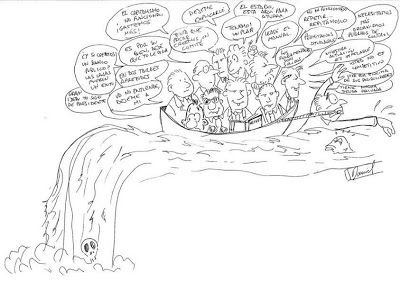
Neo-Keynesianism in one image

  • Neo-Keynesianism in one imageWhat if we create a public bank? The savings banks worked nicely. – Good idea, I want to be chairman.
  • Capitalism doesn’t work, let’s spend more.
  • It’s for your own good, let me help you.
  • You don’t understand, let me do it.
  • It had to happen, let’s create a committee.
  • Government is here to help.
  • Read the manual.
  • It didn’t work, let’s repeat it.
  • We need more supervisory boards.
  • Our analysis is impeccable.
  • You are not competitive.
  • You live above your means.
  • Your private debt is too high.